
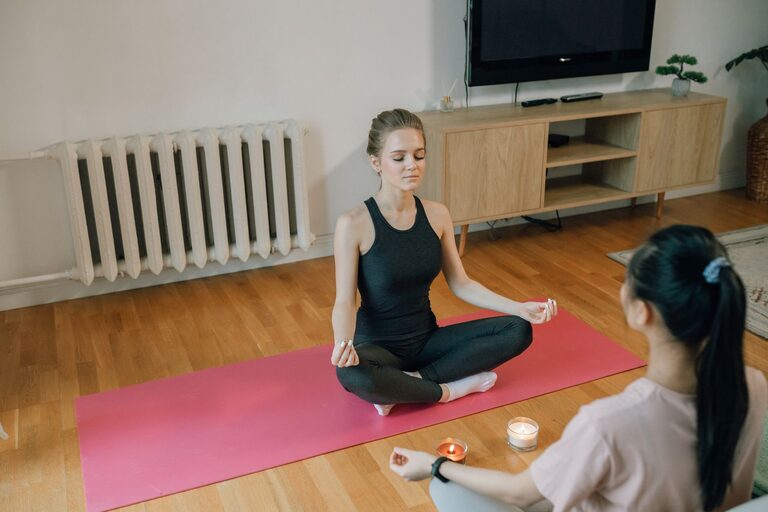
Mindful breathing breaks are simple pauses that bring your attention back to the present moment. Instead of rushing from one task to another, you take a little time to notice your breathing and how you feel.
You do not need special equipment, a quiet room, or a long practice. A mindful breathing break can last anywhere from 30 seconds to several minutes. The goal is not to breathe perfectly or clear your mind completely. It is simply to pause, notice, and return your attention to the breath.
What Is a Mindful Breathing Break?
A mindful breathing break is a short period of intentional attention. You focus on the natural movement of your breath, including the feeling of air moving in and out and the rise and fall of your chest or belly.
Your mind may wander while you practice. That is normal. Each time you notice your attention has moved away, gently bring it back to your breathing.
This practice can be useful during many parts of the day, such as:
– Before starting work
– Between meetings or classes
– During a busy afternoon
– Before eating a meal
– After finishing a difficult task
– At the end of the day
A breathing break is not about forcing yourself to feel a certain way. It is a chance to create a small space before moving on to the next activity.
Start With a Comfortable Position
You can practice mindful breathing almost anywhere. Choose a position that allows you to feel steady and comfortable.
You might:
– Sit in a chair with both feet on the floor
– Stand with your shoulders relaxed
– Sit on a cushion or sofa
– Rest your hands loosely in your lap
– Take a slow walk while noticing your breathing
There is no single correct posture. Keep your back naturally upright if that feels comfortable, but avoid holding your body stiffly. Let your shoulders drop and soften your jaw.
If closing your eyes feels distracting, keep them open and rest your gaze on a nearby object. Comfort and safety are more important than following a strict technique.
Begin With Natural Breathing
When you first start, allow your breath to remain natural. You do not need to take deep breaths or change the pace.
Notice simple details, such as:
– The coolness or warmth of the air
– The movement of your ribs
– The feeling of your belly expanding and relaxing
– The brief pause between breaths
– The sound of breathing
Choose one area as your main point of attention. For example, you may focus on the feeling of air passing through your nose. When you notice the breath becoming less clear, simply return your attention to that area.
Natural breathing can feel ordinary, but ordinary sensations provide a useful anchor for attention.
Try a One Minute Practice
A one-minute breathing break is a good starting point. Follow these steps:
- Pause what you are doing.
- Sit or stand in a comfortable position.
- Notice where you feel your breath most clearly.
- Follow one full inhale and one full exhale.
- Continue observing the breath for several cycles.
- When your mind wanders, acknowledge it without criticism.
- Return your attention to the next breath.
- Finish by noticing your surroundings before continuing your day.
You can use a timer if you prefer, but you do not need one. Simply taking a few attentive breaths can be enough to begin building the habit.
Let Go of the Need to Do It Perfectly
Many beginners believe their minds should become completely quiet. That expectation can make the practice feel difficult. Thoughts, sounds, plans, and memories may appear while you are breathing.
The practice is not measured by how long your attention stays on the breath. The important part is noticing when your attention wanders and returning to the present moment.
Try using a neutral phrase when you notice a distraction:
– “Thinking”
– “Planning”
– “Hearing”
– “Noticing”
– “Back to the breath”
This simple label can help you recognize what happened without getting pulled further into it.
Use Gentle Breathing Cues
Once natural breathing feels familiar, you can add a gentle cue. For example, silently say “in” as you inhale and “out” as you exhale.
You can also count a small number of breaths:
– Count one on the inhale and two on the exhale.
– Continue up to five.
– Begin again at one.
If you lose count, start over without judging yourself. Counting is not a test. It is simply another way to give your attention a clear place to rest.
Avoid forcing long, deep, or rapid breaths. The practice should feel comfortable. If you feel lightheaded or uncomfortable, return to your normal breathing and stop if needed.
Connect Breathing Breaks to Daily Habits
A regular cue makes it easier to remember your practice. Choose an activity that already happens each day and place a short breathing break next to it.
Possible reminders include:
– After brushing your teeth
– Before opening your email
– When your computer starts
– While waiting for water to boil
– Before getting into the car
– After putting your phone away at night
You can also set a quiet reminder on your phone or place a small note near your workspace. Keep the reminder simple, such as “Pause and breathe.”
Starting with one break each day is often more practical than creating an ambitious schedule. Once the habit feels natural, you can add another brief pause.
Make the Practice Fit Your Environment
Mindful breathing does not require complete silence. You can practice in a busy home, office, or outdoor space by including sounds as part of the experience.
If the environment is distracting, try these adjustments:
– Keep your eyes open
– Focus on the physical feeling of your feet on the floor
– Shorten the practice to a few breaths
– Use a quiet, neutral background sound
– Move to a more comfortable location when possible
The aim is not to control every part of your surroundings. It is to practice paying attention within the environment you have.
Explore Different Types of Breaks
A breathing break can take several forms. Experiment to find what feels natural.
The Arrival Pause
Take three attentive breaths when you arrive at work, school, or home. Notice the change from one part of the day to the next.
The Transition Pause
Before beginning a new task, pause for 30 seconds. Feel your feet, notice your posture, and follow a few breaths.
The Walking Pause
Walk slowly for a short distance. Notice the movement of your legs and the rhythm of your breathing.
The Evening Pause
At the end of the day, sit comfortably and observe your breath for two or three minutes. When the practice is complete, gently shift your attention to the room around you.
Keep a Simple Practice Record
A brief record can help you notice patterns without turning the practice into another task. Write down:
– When you practiced
– How long the break lasted
– Where you practiced
– What you noticed
You do not need to rate your performance. The purpose is simply to see what makes mindful breathing easier to remember and enjoy.
A Simple Reminder to Carry Forward
Mindful breathing breaks are small, flexible, and accessible. You can practice for one minute or several minutes, while sitting, standing, or walking. The key steps are straightforward:
– Pause
– Notice your natural breath
– Return your attention when it wanders
– Continue with your next activity
With regular practice, these brief pauses can become a familiar part of your day. Start small, stay comfortable, and treat each breath as an opportunity to begin again.